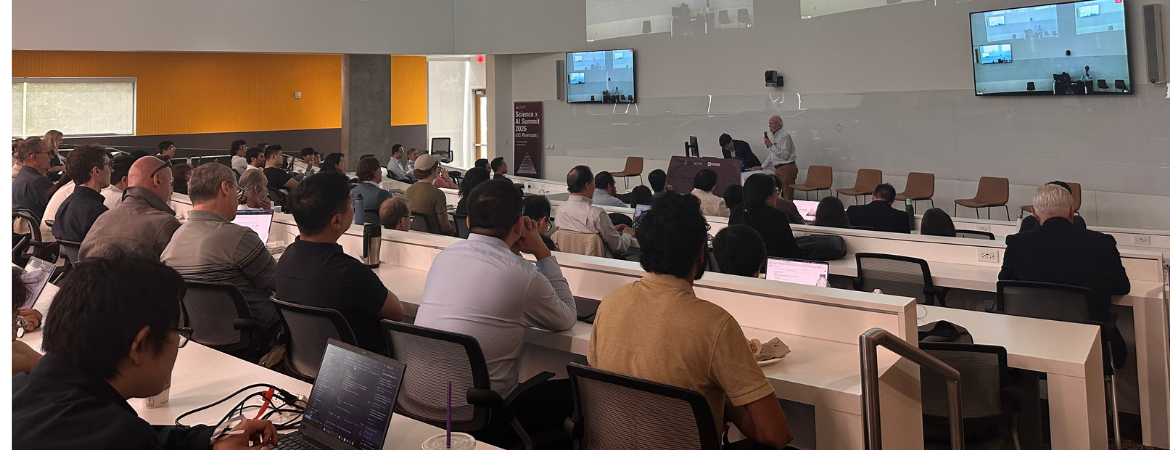
Artificial intelligence is transforming the way scientists explore the universe—from designing more sensitive instruments and accelerating complex simulations to uncovering patterns hidden within enormous datasets. But at the Science x AI Summit held at UC Riverside, one idea surfaced again and again: the greatest breakthroughs won't come from technology alone. They will come from the people willing to learn from one another.
From the moment attendees began arriving at UC Riverside's School of Medicine Education Building II, conversations extended well beyond the lecture hall. World-renowned researchers exchanged ideas with university leaders. Doctoral students discussed research with entrepreneurs, industry scientists and public-sector leaders. Community members filled seats alongside faculty, while graduate researchers stood beside posters explaining their work to anyone who stopped to ask.
Hosted by CECI and the SAIR Foundation, the June 29 Science x AI Summit convened scientists, artificial intelligence researchers, entrepreneurs, students, industry leaders and community members to examine how emerging technologies are reshaping scientific discovery. Throughout the day, conversations crossed disciplines, generations and institutions, reflecting a simple but powerful idea: the greatest breakthroughs won't come from technology alone. They would come from the people willing to learn from one another.
Although in-person registration quickly reached capacity, the summit remained accessible through a public livestream, reflecting the organizers' commitment to making conversations about scientific discovery accessible to a broader audience.
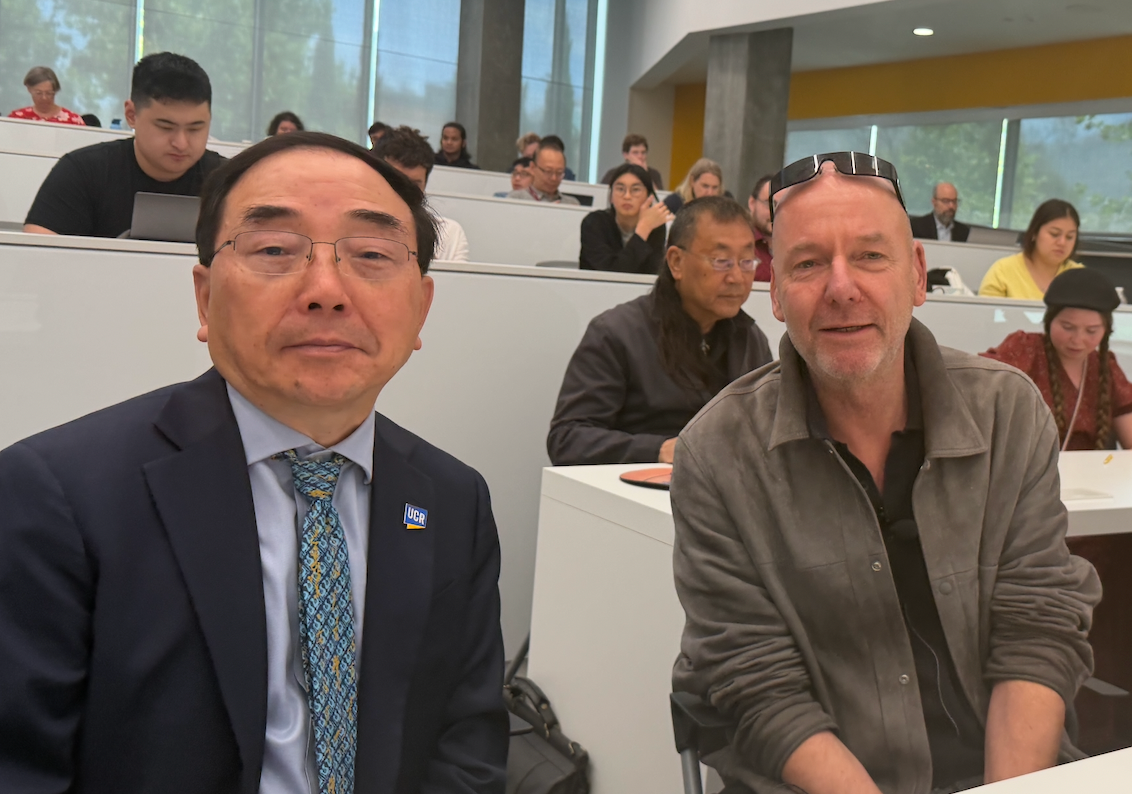
The conversations ranged from gravitational waves and quantum computing to detector design, mathematical reasoning, scientific data analysis and entrepreneurship. Presentations by Fields Medalist Terence Tao, Google Quantum AI founder Hartmut Neven, Hugo Award-winning author David Brin and other internationally recognized speakers reflected the breadth of inquiry taking place at the intersection of science, artificial intelligence and society.
Yet another story quietly emerged throughout the day.
It wasn't simply about algorithms.
It was about community.
Building the future together
For Nobel Prize-winning physicist Barry Barish, the summit represented years of work toward creating exactly that kind of environment.
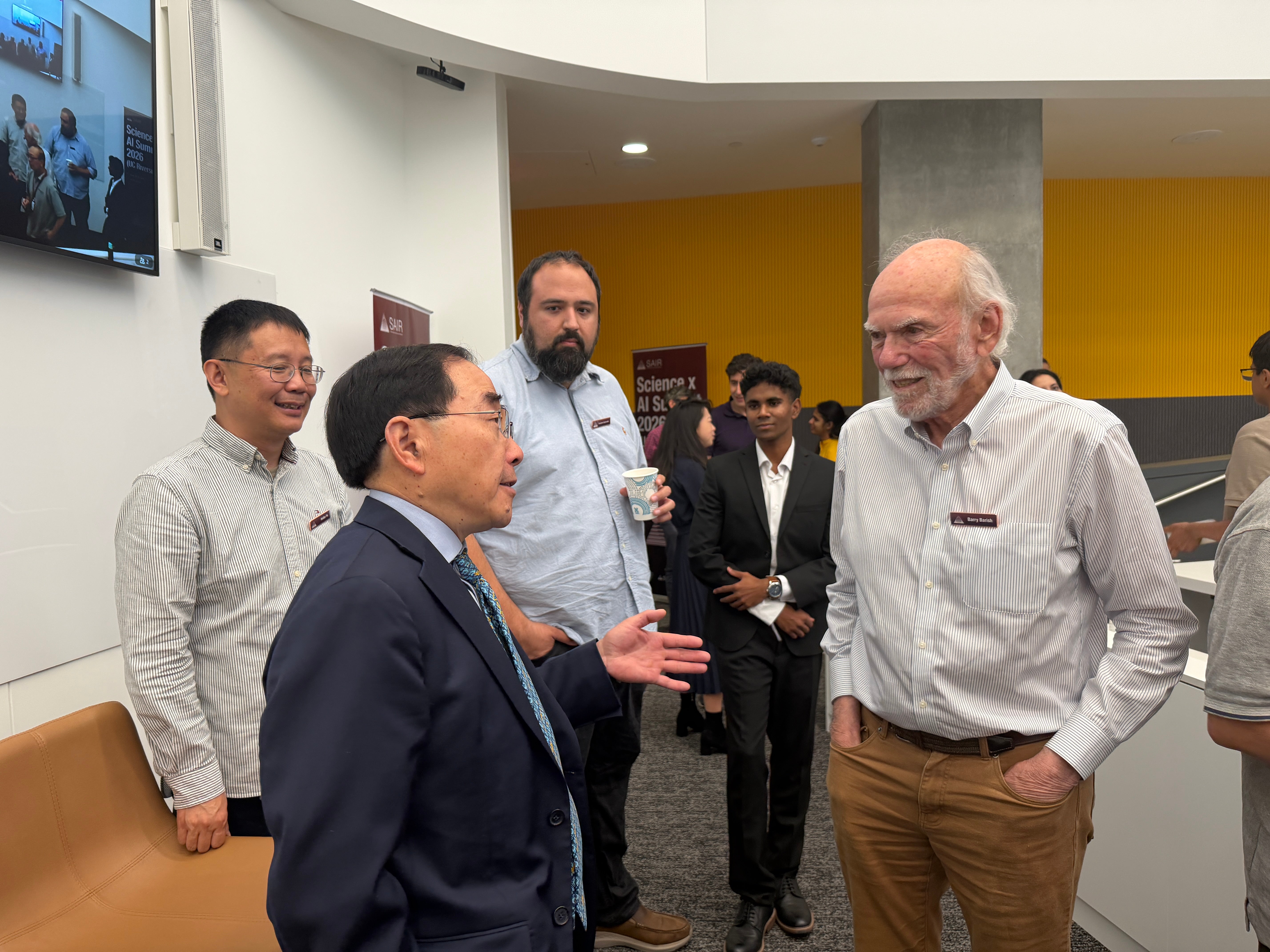
Since joining the UCR College of Natural & Agricultural Science’s Department of Physics and Astronomy in 2018, Barish has helped establish CECI, a research center dedicated to developing the next generation of scientific instrumentation for cosmology, gravitational waves, particle physics and related fields. The center reflects UC Riverside's growing commitment to interdisciplinary research while helping position the university at the forefront of experimental physics and emerging technologies.
His vision extends beyond building better instruments.
It is about building opportunity.
Earlier this year, Barish reflected on one of the reasons he came to UC Riverside: creating the kinds of opportunities for students that he had seen throughout his career while expanding access to world-class scientific research in Inland Southern California.
That philosophy was visible throughout the summit.
Doctoral students presented research alongside faculty. Community members attended highly technical keynote sessions. Local high school students spent the day listening to world-renowned scientists, then remained afterward to speak with Barish and Physics and Astronomy Department Chair, Shan-Wen Tsai.
The next generation of scientists wasn't simply being discussed.
They were in the room.
A university investing in people
In welcoming attendees, Chancellor S. Jack Hu described UC Riverside's vision for expanding research, entrepreneurship and regional partnerships while continuing the university's longstanding commitment to opportunity and social mobility.
"The story of UC Riverside is not a story of excellence or access," Hu said. "It's a story of UC Riverside achieving excellence at scale and access at scale."
Vice Chancellor for Research and Economic Development, Rodolfo Torres, reinforced that vision by emphasizing that transformative innovation begins with fundamental research.
"I always like to say applied research builds a very powerful key," Torres said. "Fundamental research develops the master key—the key that will open many doors, even some we don't yet know need to be opened."
For students, that vision was tangible throughout the day.
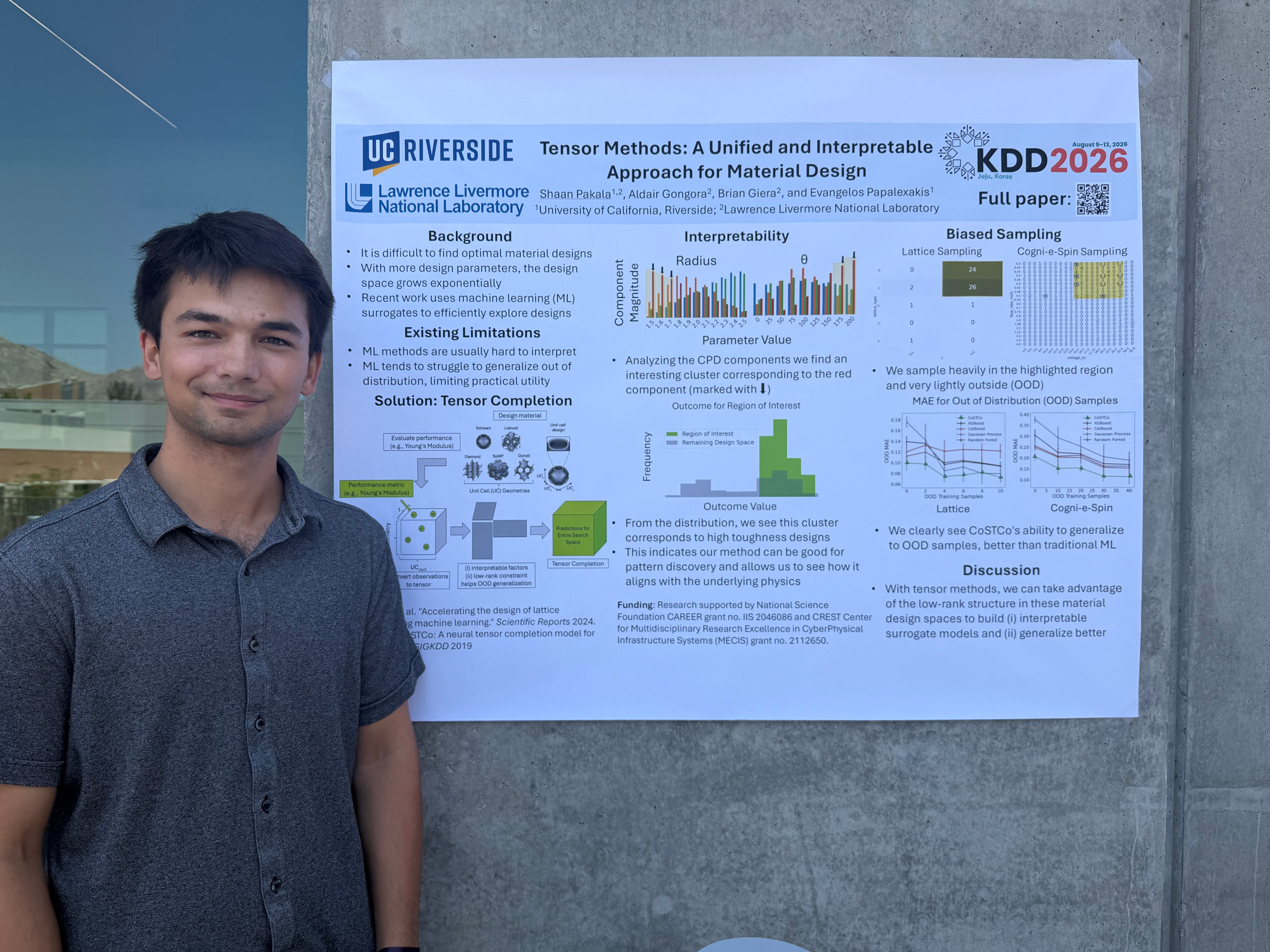
For computer science Ph.D. student Shaan Pakala, the summit represented something larger than a single event.
"It's really the culmination of things that have been building for years," Pakala said. "Now we have a venue to show that Riverside belongs. We should be talking about Riverside, too."
Jordan Steinhauser, a fifth-year psychology Ph.D. candidate and president of UC Riverside's Graduate Student Association, saw the summit as another sign of the university's growing momentum.
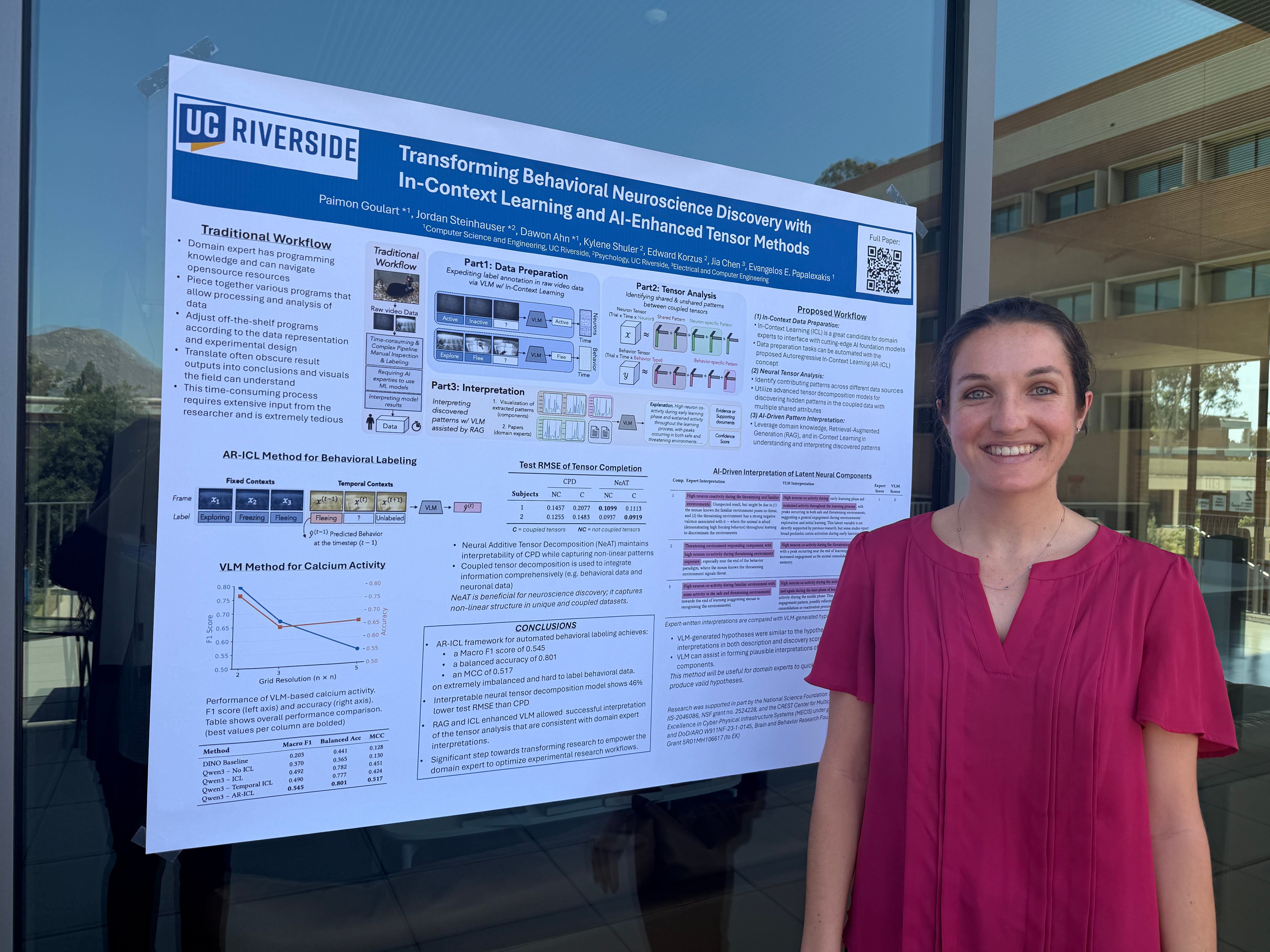
"It's incredible that UC Riverside can be a destination where all these leaders come together," Steinhauser said.
Collectively, the remarks pointed toward something larger than a single conference.
That vision was reflected in the audience as well, bringing together researchers, entrepreneurs, students, public-sector leaders and policymakers around a shared interest in the future of science and artificial intelligence. The discussions also engaged the public policy sector, including staff members from the California State Legislature and agriculture policy analysts.
Together, the day's speakers described an emerging innovation ecosystem where scientific discovery, entrepreneurship, education and regional partnerships reinforce one another.
Bringing the right people together
For Chuck Ng, co-founder of the SAIR Foundation, UC Riverside represents an essential partner in that vision.
"We want to develop a regional hub for innovation, AI and entrepreneurship," Ng said. "UC Riverside is definitely one of the key partners."
The Inland Empire is one of the nation's fastest-growing and most diverse regions, yet its research and innovation community often receives less attention than California's coastal technology centers.
Rather than replicating another innovation hub, UC Riverside is defining its own role—bringing together researchers, entrepreneurs, industry leaders and communities around challenges too complex for any one discipline to solve alone.
The summit also explored what comes after scientific discovery. A panel on Innovation & Entrepreneurship in Southern California explored how universities, industry, investors and public-sector leaders can work together to strengthen Inland Southern California's growing innovation ecosystem. The discussion reinforced a recurring theme throughout the day: breakthroughs in AI require not only scientific advances, but also the partnerships needed to translate scientific discovery into regional opportunity.
Physics and Astronomy Department Chair Shan-Wen Tsai hopes those partnerships continue well beyond a single day.
"So many people who normally wouldn't meet were able to connect," Tsai said. "I hope this doesn't end here. I hope these relationships continue to grow."
That spirit continued throughout the day.
Sessions routinely stretched beyond their scheduled times as conversations spilled into hallways, gathered around student research posters and continued over coffee.
The questions that come next
Barish closed the summit not by celebrating what artificial intelligence can already do, but by asking what comes next.
As AI becomes increasingly capable of generating hypotheses, analyzing data and identifying patterns invisible to humans, he challenged researchers to consider one of the field's defining questions:
How will science establish confidence in discoveries made with artificial intelligence?
For centuries, scientific discovery has depended on rigorous methods for validating new ideas. Developing equally rigorous ways to evaluate AI-assisted discoveries, Barish suggested, may become one of the defining scientific challenges of the next generation.
It was a fitting conclusion to a day that posed more questions than answers.
The Science x AI Summit demonstrated that the future of discovery depends on more than increasingly powerful technology.
It depends on creating places where people from different disciplines, institutions and generations can learn from one another.
For UC Riverside, that may be the story behind the story.
The university is investing in research, emerging technologies and new centers like CECI. More importantly, it is creating opportunities for students, researchers, entrepreneurs and community members to see themselves as part of the future of scientific discovery.
Because while artificial intelligence may help shape the future of science, the future itself will ultimately be shaped by the people willing to build it.
###
Let us help you with your search