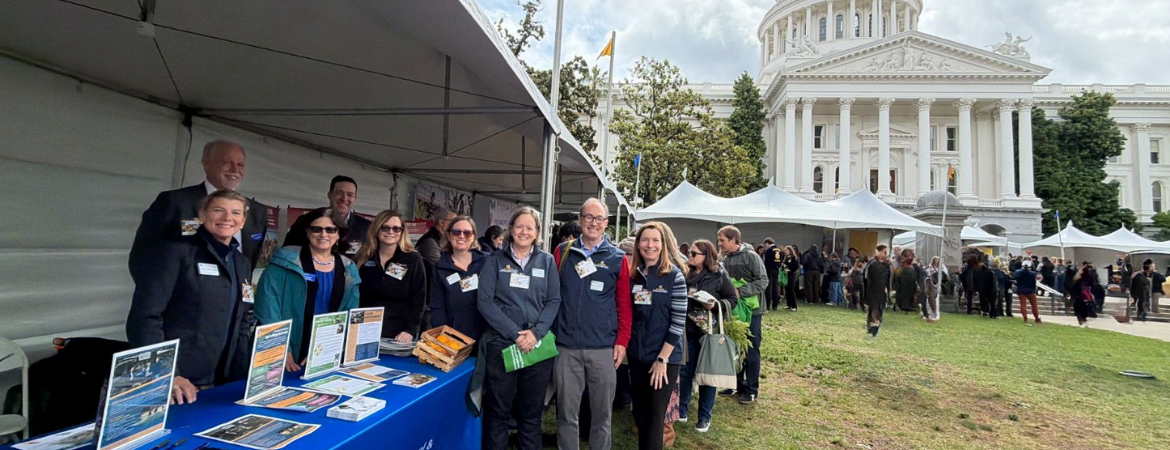
On April 21, 2026, the California Agricultural Day at the Capitol brought together leaders from across the state’s agricultural ecosystem—farmers, industry partners, policymakers, and universities—on the grounds of the State Capitol in Sacramento. Among them, the University of California, Riverside’s College of Natural & Agricultural Sciences (CNAS) stood out, not only for its research and academic strengths, but for its growing commitment to visibility, engagement, and leadership in shaping the future of agriculture.
For CNAS, participation in this year’s event marked more than a presence—it reflected a deliberate effort to show up, be seen, and share both its legacy and its vision. As CNAS Dean Peter Atkinson noted, “It’s important for us to be here—to show that UC Riverside is committed and passionate about what we do, and to share not only our history, but how we’re shaping the future of agriculture.”
Raising Visibility Where It Matters Most
California agriculture is a $59 billion industry shaped by public policy, research innovation, and workforce development. Events like CA Ag Day create a unique space where those forces converge—and where institutions like UC Riverside can engage directly with decision-makers.
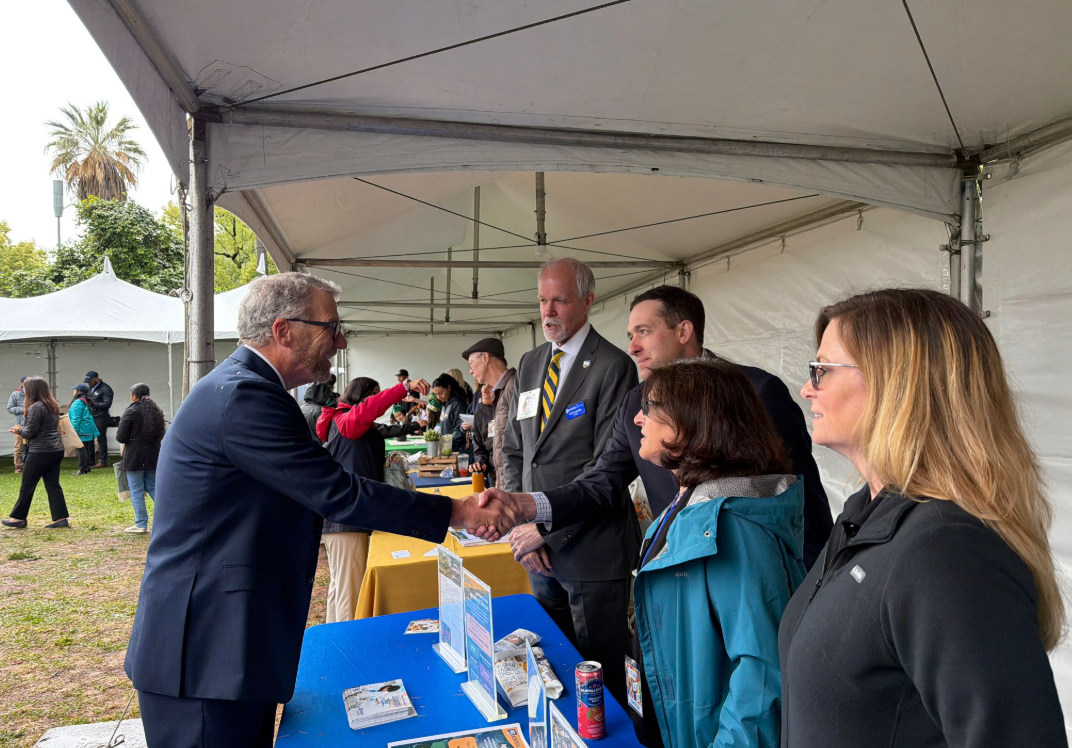
Through tabling and a series of meetings with state officials, CNAS leadership connected with representatives from the California Department of Food and Agriculture (CDFA) and the Governor’s Office, sharing how UCR’s research, academic programs, and partnerships are addressing the state’s most pressing agricultural challenges.
For Elizabeth Romero, Assistant Vice Chancellor for Governmental and Community Relations, this visibility is essential—not only to raise awareness, but to build lasting relationships that shape policy and investment. “It’s critical that we raise visibility for the research and innovation happening at UC Riverside and continue building partnerships with government, industry, and other institutions,” she said.
Romero emphasized that these conversations extend beyond awareness. They create opportunities for collaboration, inform public policy, and help ensure that decision-makers understand the value of investing in higher education. “Public policy shapes agriculture, and it’s essential that those decisions are informed by research and expertise from universities like UCR,” she said.
She also pointed to the broader impact of engagement at the state level, noting that relationships with legislators and state agencies are critical to securing funding, advancing research, and expanding student access. By connecting directly with policymakers, she explained, UCR is not only advocating for its programs, but positioning itself as a trusted resource—one that can provide expertise, support innovation, and help address the evolving needs of California’s agricultural industry.
From Research to Real-World Impact
For faculty, the day reinforced the importance of connecting research with real-world application and ensuring that UC Riverside’s contributions are clearly understood.
Houston Wilson, Associate Professor in the Department of Entomology, emphasized that participation in events like CA Ag Day is part of a broader, long-term effort to elevate UC Riverside’s visibility within California’s agricultural landscape. “A big part of being here is making sure people understand that UC Riverside is a major contributor to agricultural research and innovation,” he said, noting that awareness does not happen overnight. “Building relationships like this takes time—the more we show up and engage, the more we stay top of mind.”
He also pointed to the importance of sustained investment and coordination across research, workforce development, and infrastructure, explaining that advancing agricultural innovation requires more than just funding—it requires people, training pipelines, and facilities working together. These conversations, he noted, help connect the university’s research to broader state priorities, including economic development, workforce preparation, and the future of sustainable agriculture.
These interactions created space to highlight how UCR’s research addresses critical issues such as climate resilience, sustainable agriculture, and emerging agricultural technologies—areas where the university’s geographic location in inland Southern California provides unique advantages.
A Student Perspective on Opportunity
For CNAS student Angel Zarobinski, a fourth-year plant biology major, the experience offered more than just exposure—it provided a deeper understanding of how science, policy, and public engagement come together to shape real-world outcomes.
Throughout the day, Zarobinski spoke with a wide range of attendees, from high school students and FFA members to industry professionals and policymakers. “When I tell people I study plant biology, they’re often surprised by how directly it connects to agriculture,” she said, explaining how her work studying crop stress and drought conditions ties directly to challenges facing farmers. “It’s been really rewarding to help people understand that connection.”
Many of her conversations were with students who were still unsure of their academic or career paths—something she found especially meaningful. She made a point to reassure them that there is no single path forward, sharing that higher education offers multiple entry points, including community college and transfer pathways. In those moments, she emphasized that opportunities exist for everyone, even if the path is not immediately clear.
Reflecting on the experience more broadly, Zarobinski highlighted how opportunities like CA Ag Day can shape a student’s perspective in unexpected ways. “If you hear about an opportunity, go for it,” she said. “You never know where it will lead or what connections you’ll make.”
She also noted that participating in both state-level advocacy in Sacramento and recent experiences in Washington, D.C., gave her a new appreciation for the behind-the-scenes work that supports research and education—reinforcing the importance of connection, collaboration, and speaking up. During the day, James B. Milliken, President of the University of California, also stopped by to speak with the group and learn more about UC Riverside’s contributions to agriculture, research, and student opportunity.
UCR: An Agricultural Institution for Today and the Future
UC Riverside’s presence at CA Ag Day also served as a reminder of its identity as an agricultural institution—one that is both deeply rooted in history and actively evolving to meet the needs of modern agriculture.
As CNAS Divisional Dean of Agriculture & Natural Resources Patricia Springer explained, “We have a rich agricultural history at UC Riverside, but we can’t assume people already know that—we have to keep telling our story.”
Today, CNAS offers a range of majors that prepare students for careers across agriculture, science, and industry, including plant biology, entomology, environmental sciences, earth and planetary sciences, and genetics and molecular biotechnology.
Importantly, UC Riverside is also the only R1 (Research 1) university in Southern California with a strong agricultural foundation, positioning it uniquely to lead at the intersection of research, education, and industry impact.
Building on this foundation, CNAS is expanding its academic portfolio with a new Bachelor of Science in Agricultural Sciences, expected to launch in Fall 2027. This interdisciplinary degree will combine plant, soil, and environmental sciences with hands-on learning, preparing students for careers in modern agriculture and food systems.
The program will include coursework in crop production, global agricultural policy, and data-driven agriculture, along with required research or industry internships. Students will also be able to pursue specialized tracks in areas such as agronomy, crop protection, digital agriculture, agribusiness, public service, and agricultural education—reflecting the increasingly interdisciplinary and technology-driven nature of the field.
Strengthening Partnerships Across California
CA Ag Day also highlighted the collaborative spirit that defines California agriculture. CNAS joined peer institutions including UC Davis College of Agricultural and Environmental Sciences, alongside other universities and industry partners, in a shared effort to advance agricultural education and innovation.
For CNAS Dean Peter Atkinson, being present alongside these institutions is both symbolic and strategic. “You can see we’re here alongside our colleagues and partners from across the state, including UC Davis and the Cal State system,” he said, emphasizing that visibility in these shared spaces is essential. “It’s important that we are on display—that people see UC Riverside and understand the role we play.”
Atkinson also pointed to UC Riverside’s distinct geographic position, noting that it is the only UC campus with a strong agricultural presence in Southern California. That positioning, he explained, allows UCR to serve as a critical bridge between regions, connecting inland Southern California to statewide agricultural conversations happening at the Capitol.
The growing relationship with Ashley Stokes, Dean of the UC Davis College of Agricultural and Environmental Sciences, reflects this collaborative approach—one that prioritizes partnership over competition in addressing the state’s agricultural challenges.
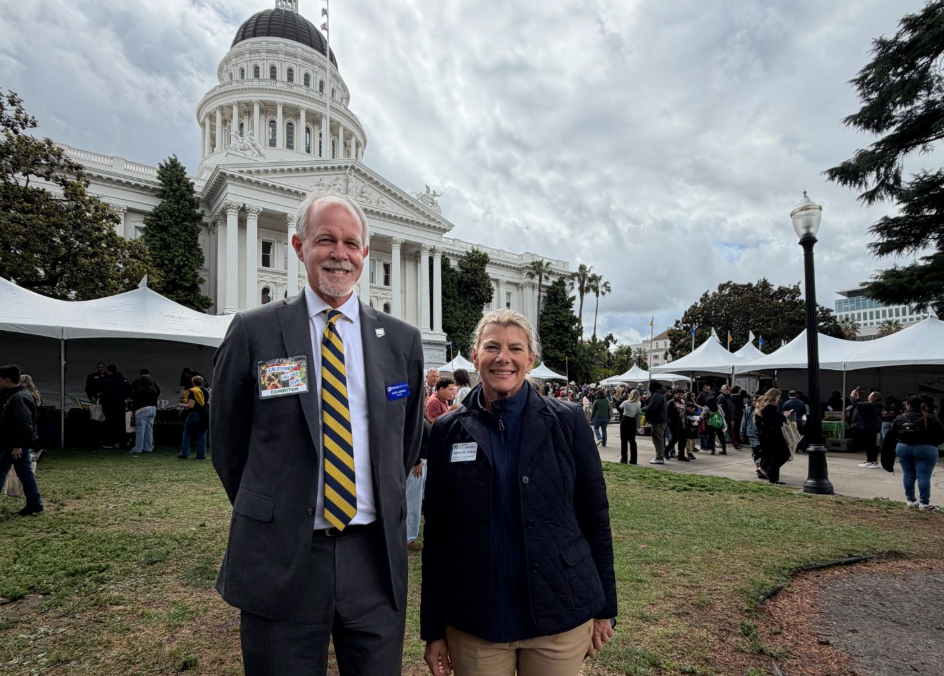
As Springer noted, these connections are essential to long-term impact. “Events like this are about building relationships so that when agricultural issues arise, UC Riverside is top of mind,” she said.
Looking Ahead
CNAS’ presence at the Capitol is part of a broader, intentional strategy to elevate UC Riverside’s role in California agriculture—ensuring that the university is not only contributing to the field, but helping lead it.
As Dean Atkinson put it, “when we engage directly with policymakers, we’re not just telling our story—we’re ensuring UC Riverside is part of the conversation about the future of agriculture.”
From strengthening relationships with legislators and industry leaders to expanding academic programs and partnerships, CNAS is positioning itself at the center of the systems that will shape agriculture for generations to come.
###
Let us help you with your search