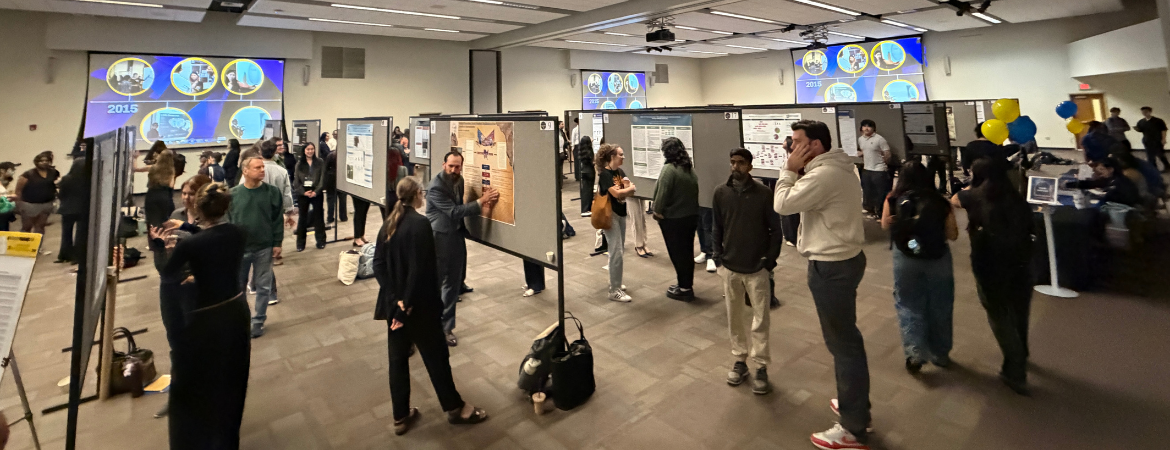
More than 480 undergraduate students from across the University of California, Riverside presented faculty-mentored research and creative projects during the 20th annual Undergraduate Research and Creative Activity Symposium, held April 21–24.
The symposium culminated with in-person poster presentations on April 24 in HUB 302, where students shared research spanning molecular biology, agriculture, medicine, environmental science, education, statistics, and the humanities.
“We are celebrating the fantastic faculty-mentored undergraduate research that happens on our campus,” said Gladis Herrera-Berkowitz, Director of the Center for Undergraduate Research and Engaged Learning. “When we started in 2006, we had 34 students presenting. This year, we hosted 486 student presenters throughout the week.”
Herrera-Berkowitz said the symposium has evolved into a campuswide celebration of undergraduate scholarship, with oral presentations hosted virtually earlier in the week and 276 students presenting posters in person on Friday alone.
“One of the things that I’m very proud of is that this event has become a campuswide event where everybody’s supporting,” she said. “It’s being embraced by the campus — this celebration of research.”
Nearly 70% of symposium participants were students from UC Riverside College of Natural & Agricultural Sciences.
For many students, the symposium represented years of research, mentorship, and personal growth.
Mabel Tan, a fourth-year biology major and Chancellor’s Research Fellow, presented research examining a protein involved in immune cell development and function.
“I really think that it’s very important to try research at some point in your undergraduate career,” Tan said. “Whether you realize you love research or decide it’s not for you, you only really know once you try it.”
Tan, who will attend medical school this fall, said undergraduate research helped prepare her for future scientific and clinical work.
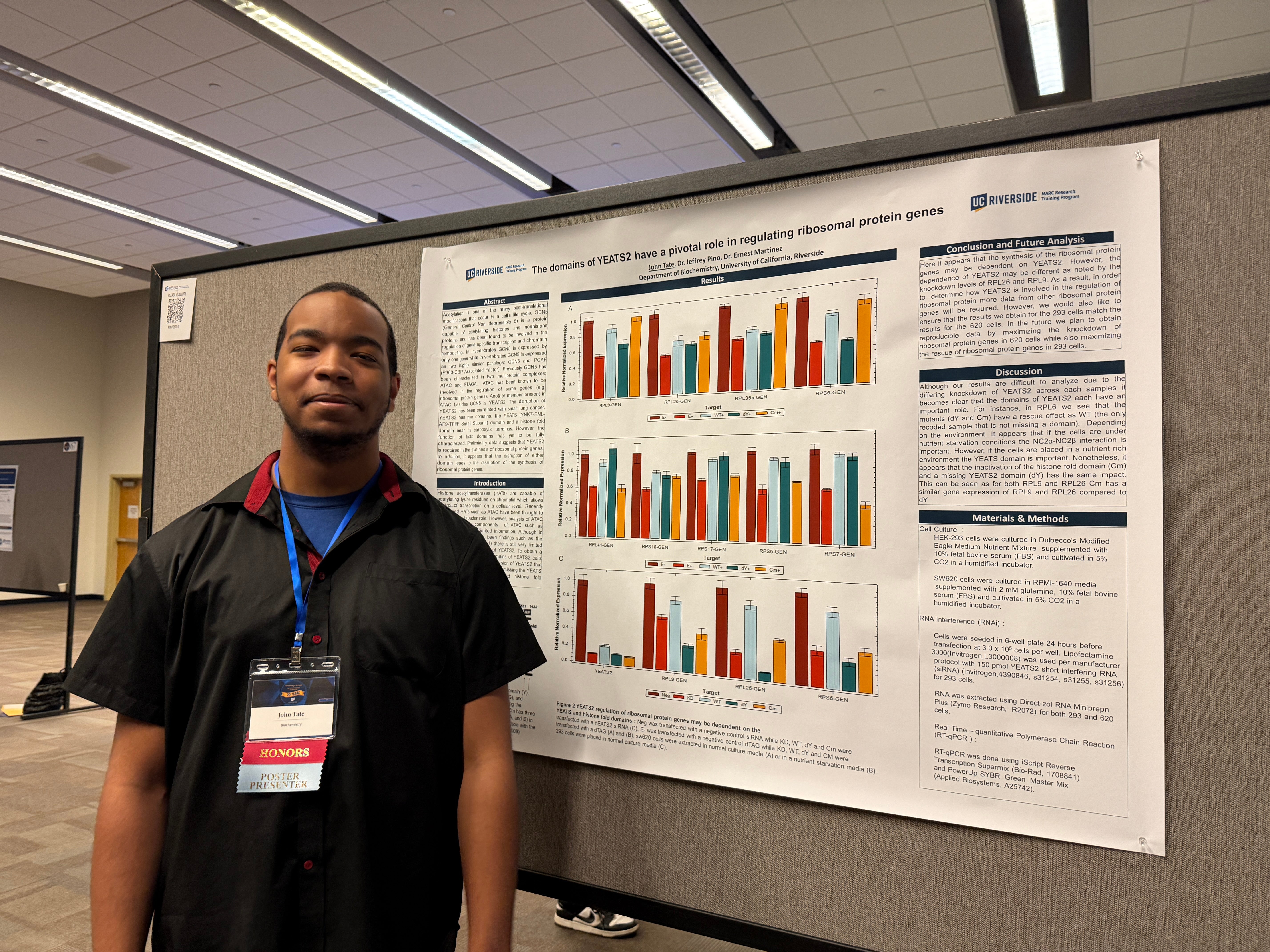
Fourth-year biochemistry major John Tate presented research focused on epigenetics and proteins connected to cancer biology. Working in the lab of Ernest Martinez through the MARC program, Tate said research strengthened both his scientific knowledge and problem-solving skills.
“It helps my critical thinking skills,” Tate said. “Not only does it help with solving real-world problems, but it also helps you perform better academically.”
Tate will continue his academic journey this fall in UCR’s biophysics graduate program.
Many projects focused on real-world challenges with direct societal impact.
Fifth-year biochemistry major Cynthia De Leon presented research examining how an invasive insect spreads a harmful plant pathogen that threatens citrus, grape, and almond crops throughout California.
“If that supply is dwindling because it’s getting infected, think about what that could mean to you in terms of your groceries,” De Leon said. “It affects people at home, but also economically across Southern California.”
De Leon first became involved in research through UCR’s RISE program and plans to pursue a Ph.D. and a career in scientific research.
Other students explored how research can improve teaching and learning.
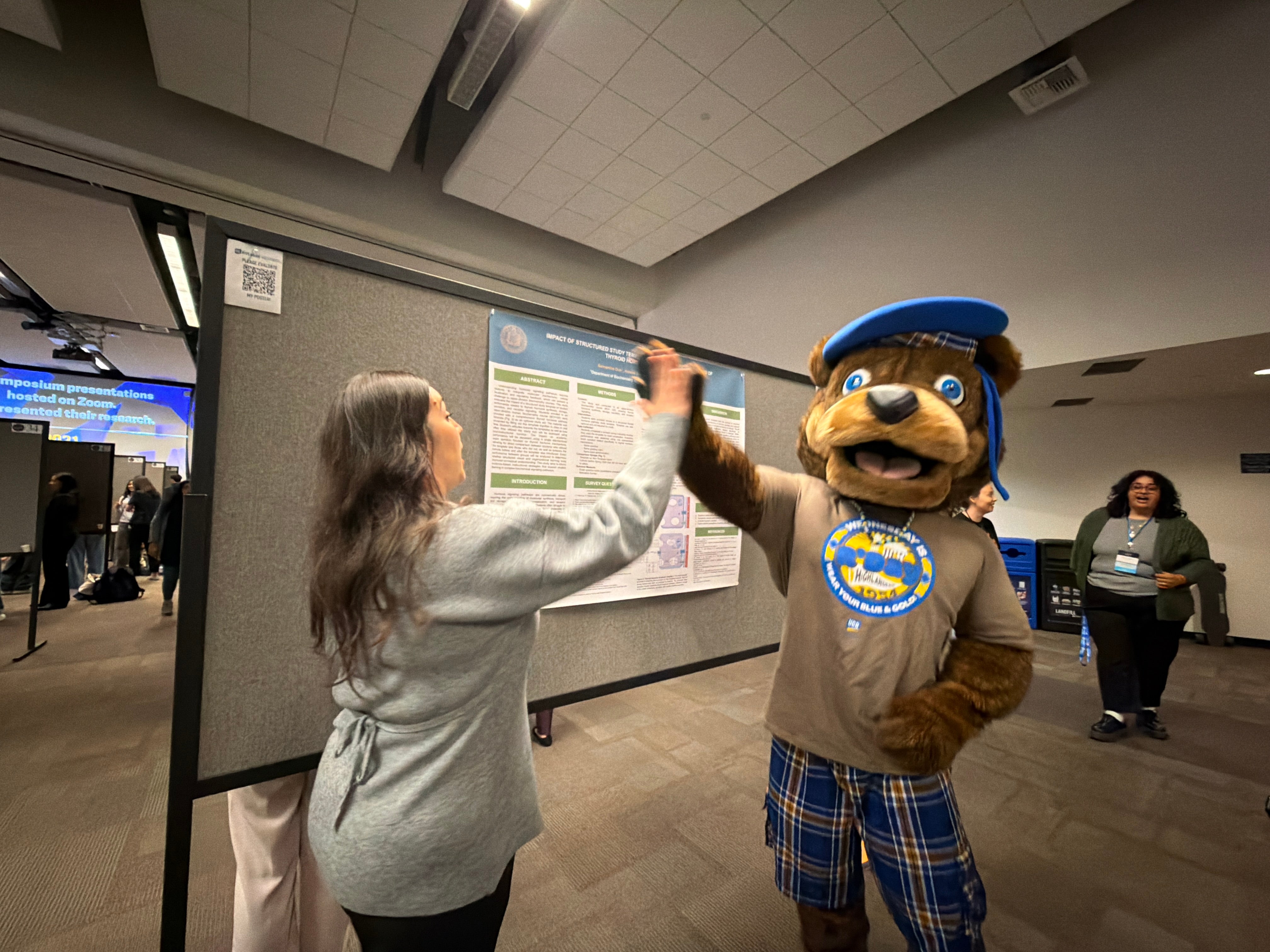
Fourth-year biochemistry major Samantha Guli presented education-focused research examining visual learning tools designed to help students better understand complex hormone pathways.
“Research doesn’t have to be where you’re in a lab coat and goggles pipetting all day,” Guli said. “Research could be something fun where I’m looking at students who were given a learning template and how that improved their outcomes.”
Guli said the experience helped build her confidence as she prepares for medical school and future research opportunities.
“It showed me that I was capable,” she said.
Sarah Fan, a third-year microbiology major with a minor in education, presented research exploring how inquiry-based learning and course-based undergraduate research experiences can improve student engagement in laboratory courses.
“I think research teaches you a lot about persistence and work ethic,” Fan said. “Not every experiment is going to go great. It’s about showing up and trying again.”
Fan said undergraduate research also helped her build meaningful professional relationships with faculty mentors and graduate students.
“You get to form these professional relationships and networks with people who have more experience,” she said.
Several projects reflected the interdisciplinary nature of undergraduate research at UCR.
Alexis Castaneda, a third-year statistics major, worked with researchers in environmental science to study alternative methods of monitoring soil moisture in citrus orchards — work that could help growers conserve water during ongoing climate and drought challenges.
“I honestly didn’t envision that I would be doing this at all,” Castaneda said. “But after doing research, I realized I really enjoy it.”
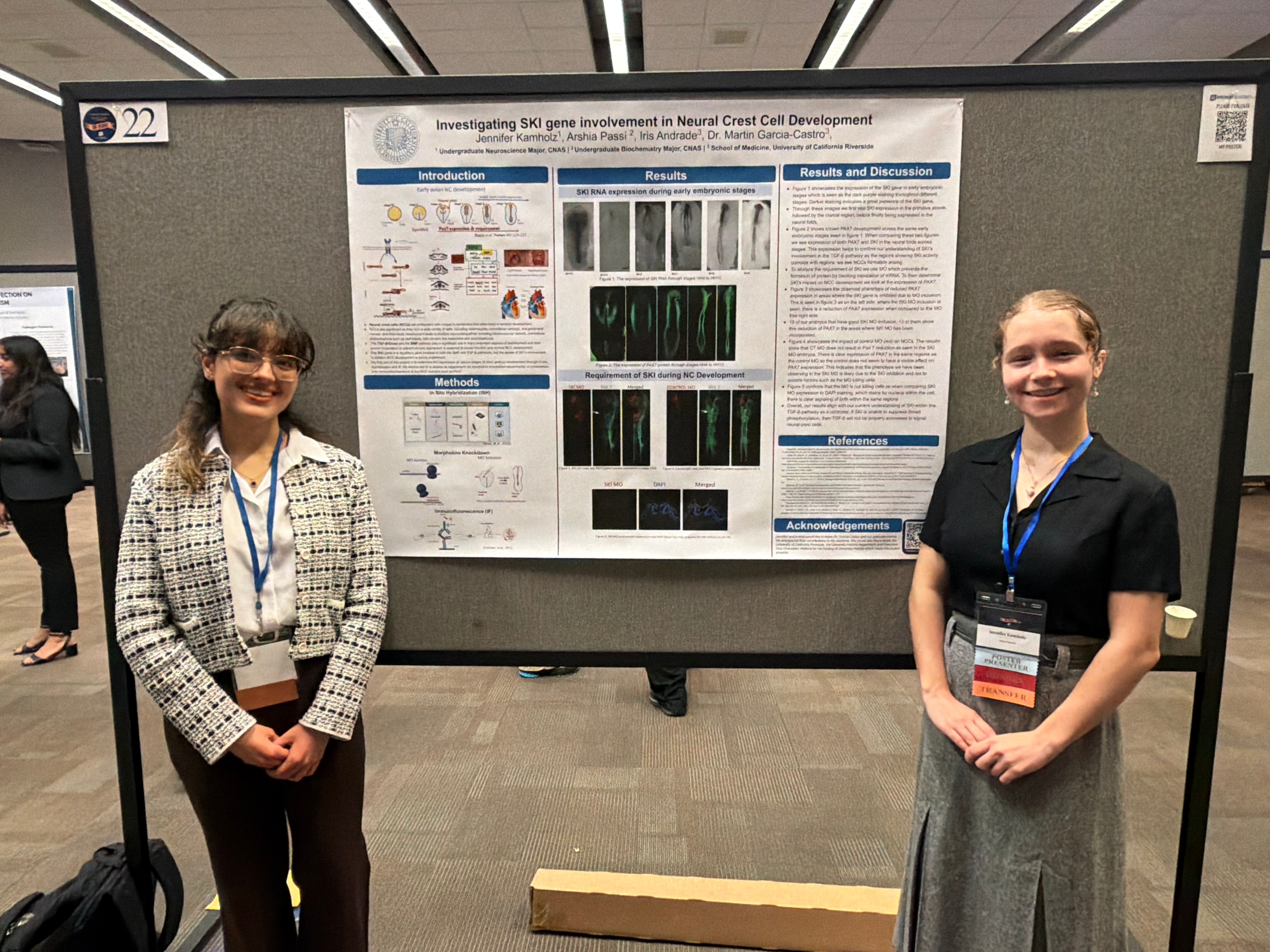
Students Jennifer Kamholz and Arshia Passi presented neuroscience and stem cell research focused on neural crest development and congenital disorders.
“Research helps you develop a lot of essential skills,” Kamholz said. “It helps you understand not just the facts you learn in class, but how we know those facts.”
Faculty mentors said undergraduate research creates transformative opportunities for students while also strengthening the university’s research culture.
Selene Bobadilla, Assistant Professor of Teaching in Biochemistry, mentors undergraduate students conducting classroom-based education research.
“The value is tremendous,” Bobadilla said. “Students get professional development, mentorship, and the opportunity to transition from being learners to becoming practitioners.”
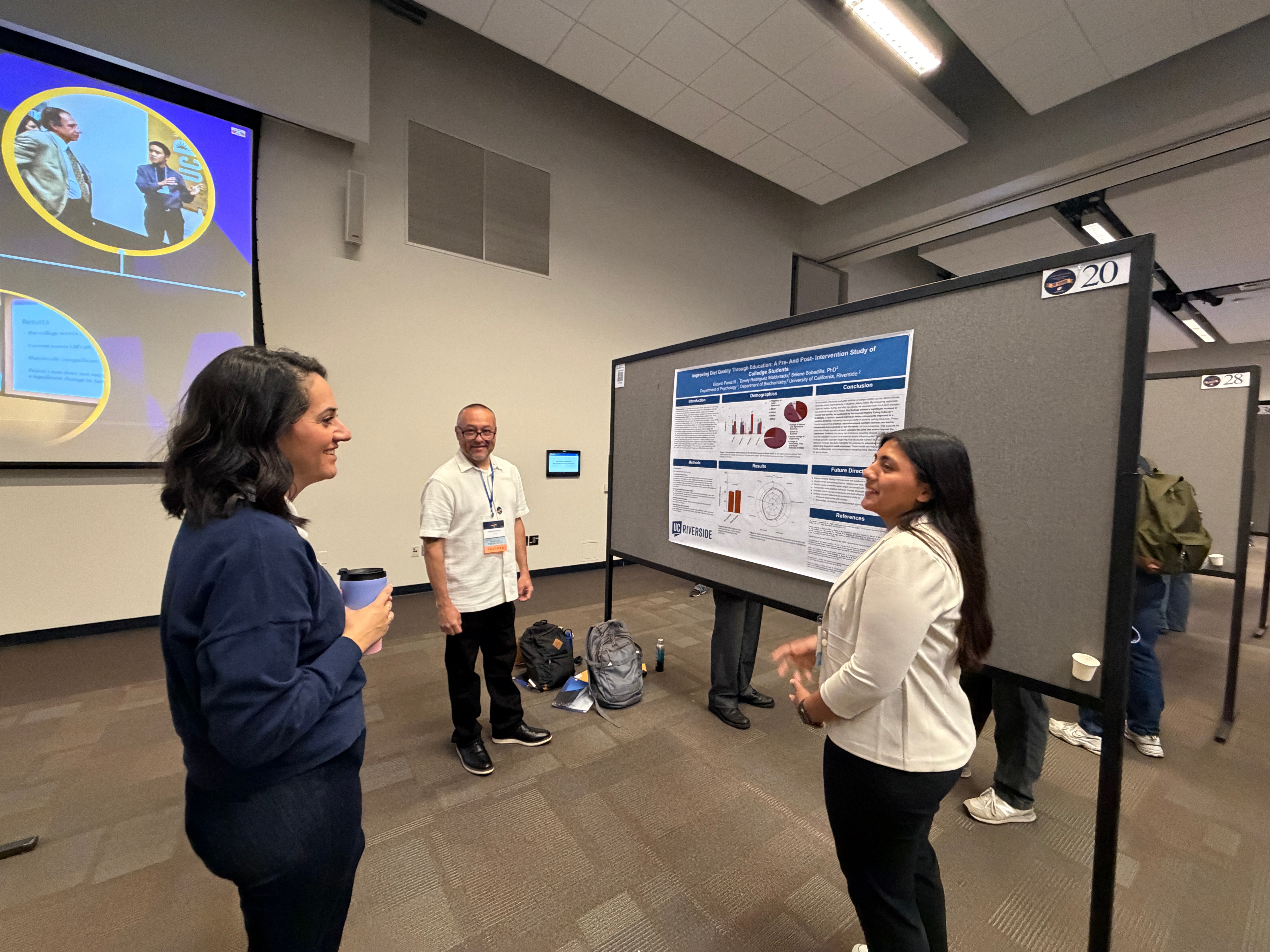
She added that faculty benefit as well.
“They bring new perspectives and diversity of thought,” she said. “That helps move ideas forward.”
Herrera-Berkowitz said undergraduate research experiences help students gain confidence, develop workforce skills, and recognize their own potential.
“I think for UCR, it’s great to give students this foundation and this confidence that they can do it,” she said. “That they are just as competitive as students coming from anywhere else.”
The symposium also highlighted the broader role undergraduate research plays in shaping future scientists, physicians, educators, and scholars.
“Oftentimes students think research is just a white lab coat,” Herrera-Berkowitz said. “But we have students doing creative projects, history projects, AI work — research is incredibly diverse.”
As the symposium marked its 20th anniversary, Herrera-Berkowitz said the event continues to demonstrate the growing impact of undergraduate scholarship at UCR — and the opportunities available when students are encouraged to explore discovery beyond the classroom.
###
Let us help you with your search