Science Outreach and Community Engagement
The College of Natural and Agricultural Sciences (CNAS) is committed to providing high quality science outreach and enrichment programs to train educators, inform and engage the public, and support the community in scientific endeavors. In addition, there are several mentoring programs available to enhance the quality of students entering CNAS programs and encourage current students to pursue advanced degrees and careers in science. Listed below is a summary of some of our programs.
CNAS also provides significant outreach and community engagement through Cooperative Extension (CE) programs. UCR is one of three land-grant campuses of the UC system, which is administered centrally through the division of Agriculture and Natural Resources (ANR). The division of ANR has CE programs in every county in California providing direct connections between the University and the people of California. CE and Agricultural Experiment Station (AES) faculty conduct research, teaching, and community engagement programs with linkage to our communities through county-based CE programs.
California Mathematics and Science Teacher

The California Mathematics and Science Teacher initiative program is part of a comprehensive plan to improve mathematics and science education in the Inland Empire. As a result of the CMST program and its partnering efforts, public school students in the Inland Area have benefited from the mathematics and science knowledge provided by CMST Apprentices. Further, public school teachers have benefited from the assistance provided from the program.
Entomology Outreach
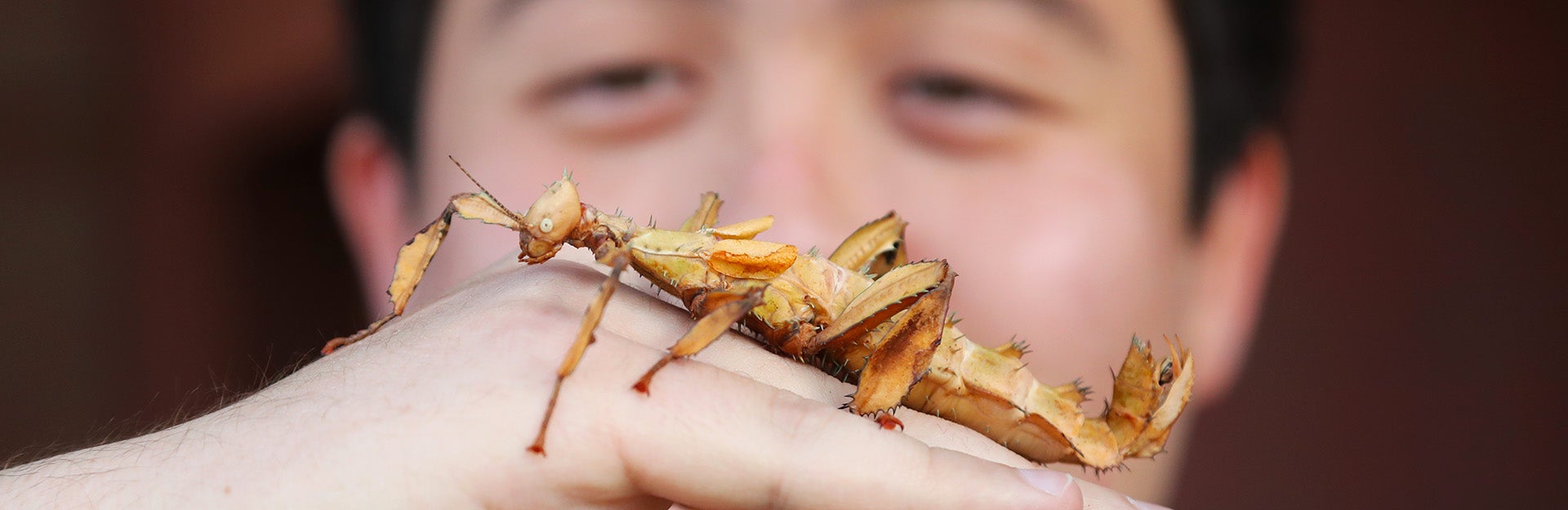
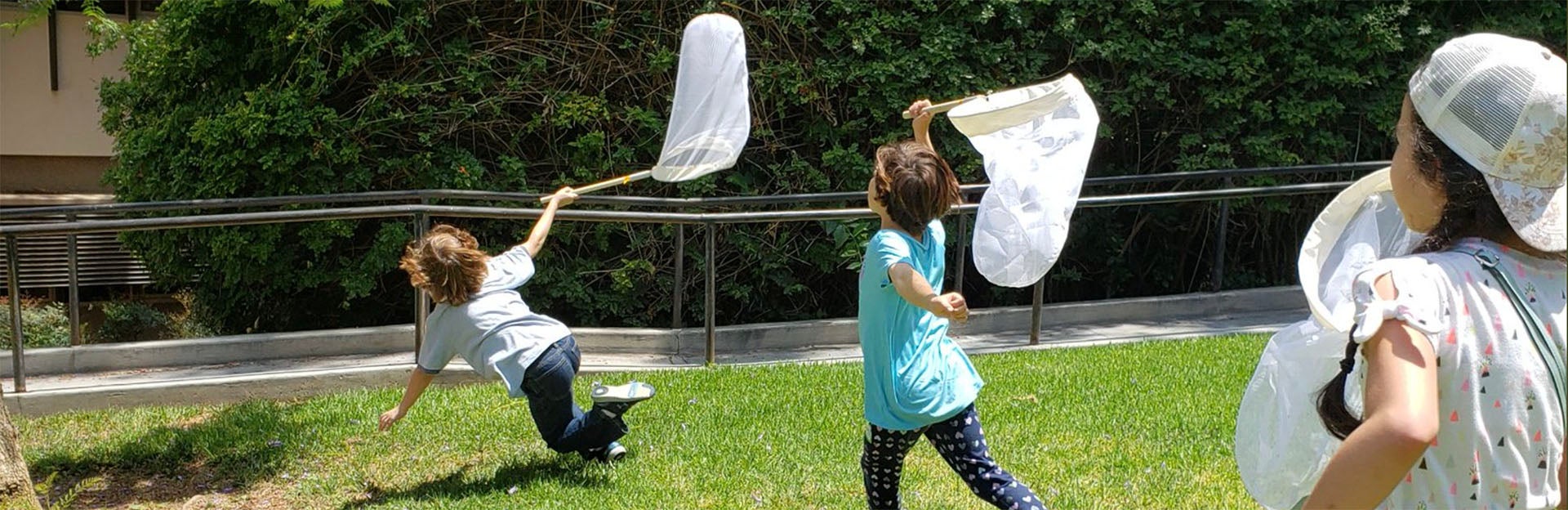
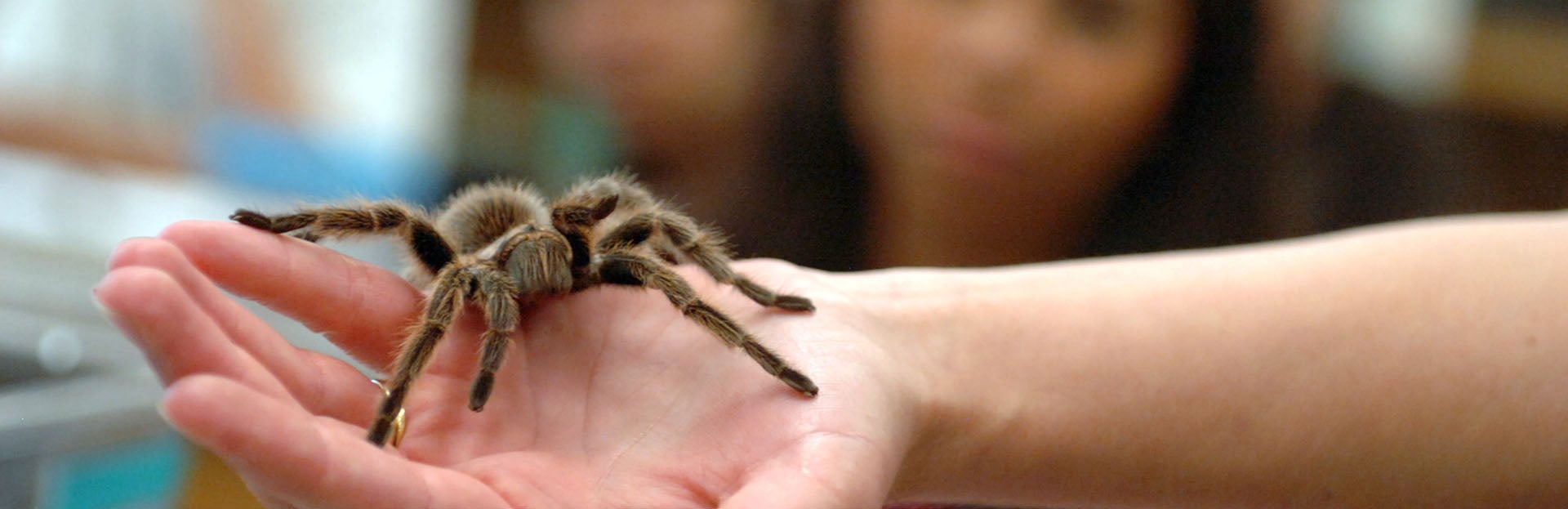
The UCR Entomology Department conducts California standard-based teaching programs using live insects and educational displays to K-12 schools, museums, and other community groups throughout the Riverside area. Educational outreaches are also provided during regional and community events to highlight the insect life that surrounds our urban communities and affect our health and food production. Educational outreach includes a variety of activities performed by the graduate and undergraduate students in the Department of Entomology.
For more information, please email ucrentooutreach@ucr.edu or call (951) 827-5714.
Evolution, Ecology, and Organismal Biology Graduate Student Association Outreach
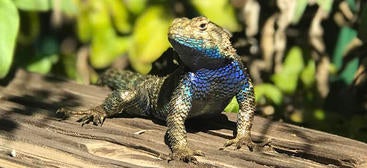
The EEOBGSA outreach program at UCR provides K-12 mentoring with an emphasis on science fair mentoring and judging, teacher training, K-12 demonstrations and 'careers in science presentations,' undergraduate mentoring, career development and research training. Members of the EEOBFSA participate in and coordinate several outreach events throughout the year.
For more information, please send an email to Clint Collins and Layla Hiramatsu
GeoScience Education Outreach Program
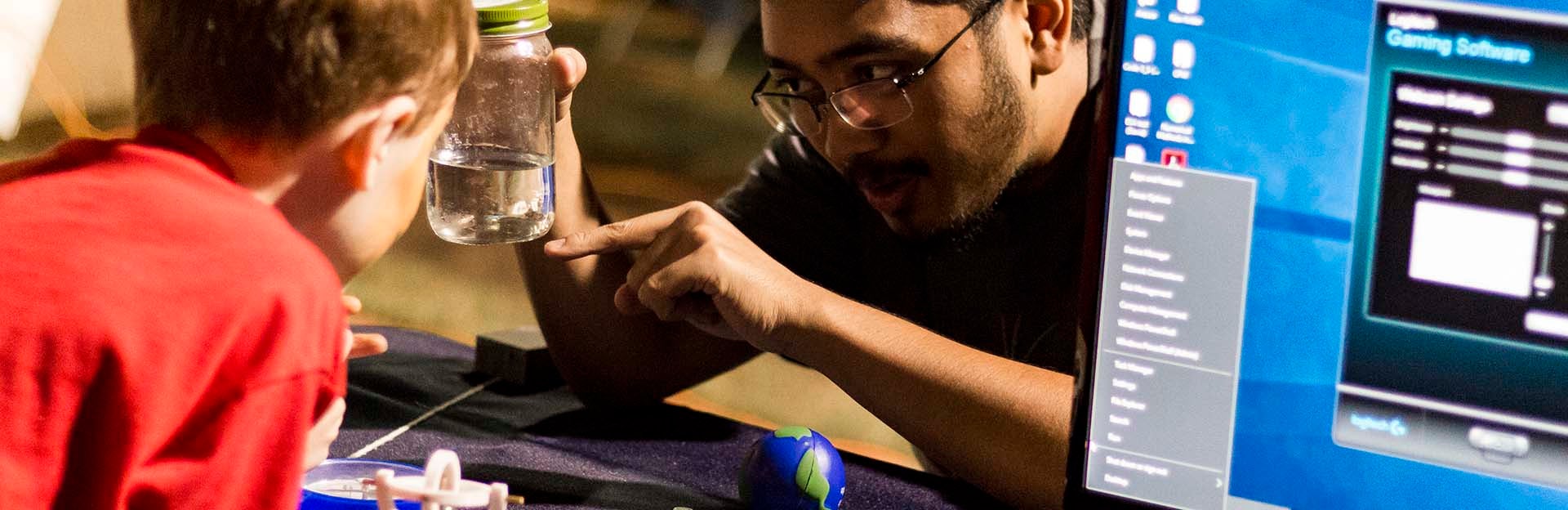
The Geoscience Education Outreach Program is a graduate student community outreach effort by the Earth Sciences department at the University of California, Riverside. UCR graduate students will travel to your school and give fun and interesting presentations about a variety of Earth Science topics to your students, as a community service at no cost to your school. Programs include short presentations, adjusted to a particular age/grade bracket, on a variety of topics, which are followed by hands-on activities meant to show students how fun and accessible science can be.
International Masterclasses - Hands on Particle Physics
Each year, 50-80 high school students come to UCR to meet UCR faculty who lead international efforts in particle physics. After a series of lectures in the morning, the students spend the afternoon performing computer exercises using real data from the Large Hadron Collider at the CERN Laboratory in Geneva Switzerland. The following morning, the students return to UCR and a videoconference is held with CERN, and with 3-4 groups of European high school students who have performed the same exercises, to compare and discuss the results.
For more information, please send an email to Bill Gary or call (951) 827-5329.
Plant Discovery Day
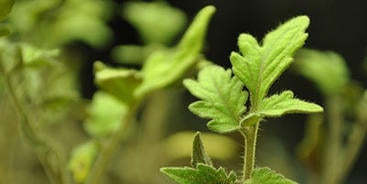
This annual event brings over 100 fifth grade students from Highland Elementary School to UCR to enjoy a day of interactive science demonstrations, led by graduate students, which focus on the importance of plants in our society from the perspective of food, fuel, and sustainability. With the aim of improving young students’ exposure to the sciences and opportunities to further their education, students participate in a range of activities, from microscopy to measuring CO2 levels, to strawberry DNA extraction, to visits with mascots Scotty the Bear and Norm the Navel.
For more information, please send an email to Jessica Diaz.
QuarkNet Workshop
Annual summer workshop for high school physics teachers hosted by the Department of Physics and Astronomy. Sponsored by Quarknet, a project headquartered in Fermilab, this program provides professional development and on-going support for physics teachers.
For more information, please send an email to Dr. John Ellison, Dept. of Physics and Astronomy or call (951) 827-4301.
Riverside Insect Fair
Founded in 2015 by the UCR Entomology Graduate Student Association and the Riverside Metropolitan Museum, the Annual Riverside Insect Fair is a free, family-friendly event that aims to bring science into your hands and hearts! The goals are to share and promote current research being done in the UC Riverside Entomology department, and to bring STEM and science education to the Riverside community. With help from City of Riverside, the UCR Entomology Graduate Student Association is able to support tables for dozens of vendors and local businesses in addition to their own lab-oriented research booths at this all-day event, located in beautiful downtown Riverside.
RUSD Science and Engineering Fair
Co-sponsored by CNAS and the Bourns College of Engineering, this program draws nearly 300 projects each year at UC Riverside facilities allowing greater access for public viewing than is possible in a public school site. More than 100 UCR faculty, graduate students, and undergraduate students each year serve as judges for the junior and senior divisions of the fair. Faculty working independently from the college advise and guide students in their projects for science fair and other science competitions. CNAS and BCOE departments provide sponsored awards.
For more information, please contact cnascommunications@ucr.edu.
Science and Math Initiative

SMI is a UC system-wide program created through a compact between the Governor of California and the UC President. The mission of the program is to promote STEM education and to increase the pipeline of future science and mathematics teachers in California. Participation in the program is free. However, all students participants must be a declared STEM major in either the College of Natural and Agricultural Sciences (CNAS) or the Bourns College of Engineering (BCOE). All SMI mentor teachers are California credentialed single-subject science or mathematics teachers. To best serve program participants, CaTEACH-SMI provides four general areas of services:
- Early pedagogical training
- Pre-service advising and mentoring
Science Lecture Series
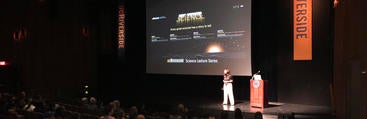
The Science Lecture Series is a series of lectures on science for the public presented by the College of Natural and Agricultural Sciences.
Scientists in the Classroom Program
The Scientist in the Classroom Program (SCP) provides a pathway for our graduate and undergraduate students to contribute to K-12 education in our community, to share their passion for physics and science, and to inspire our future generations, while at the same time getting some training and hands-on experience in K-12 education.
Our participating UCR students' SCP activities include delivering physics demonstrations and organizing hands-on activities in the classroom, assisting with the Science Olympiads, presenting their research to K-12 students, and more recently, working with elementary school students during after school program. The SCP is funded by the National Science Foundation through the CAREER grant DMR-0847801.
For more information, please send an email to Prof. Shan-Wen Tsai, or Dr. Maria Chiara Simani.
SISTERS
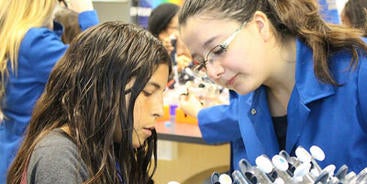
The Success in Science and Technology: Engagement with Role-Models (SISTERS) program was begun by Roselyn Tran ’15 when she served as president of the CNAS Science Ambassadors. The program provides mentoring and programming that encourages female students at University Heights Middle School in Riverside to pursue an education and a career in STEM fields. The program continues through the ongoing volunteer work of the female students at CNAS who serve as Science Ambassadors.
For more information, contact cnassisters@gmail.com.
Summer Physics Teacher Academy
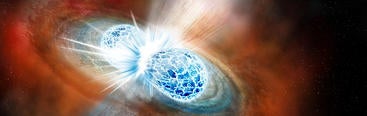
The Summer Physics Teacher Academy is a weeklong workshop hosted by the Department of Physics to help train and equip local high school physics teachers with practical and conceptual physics lessons, hands-on activities, curriculum and technology to use in their own classrooms. Through lectures and demos, the teachers will learn the latest in a variety of research topics conducted by UCR physicists such as classical mechanics, astrophysics, condensed matter, thermal physics, high energy physics, oscillations and waves, electricity and magnetism, nanoelectronics, biophysics, and optics.
UCR Botanic Gardens
The UCR Botanic Gardens is a living museum, an outdoor classroom, or laboratory without walls. Many classes from UCR and local colleges utilize the Gardens for tours and laboratory exercises. Our trained docents are also available for guided tours for K-12 school groups, college classes, and non-school groups. Docent-guided school tours at the Gardens integrate closely with the California State science and social studies teaching curriculum. Tours can also be adapted to fit the preferred curriculum of the teacher. Our unique setting and well-known collection of plants offer many first-hand experiences to enhance student learning. Any adult group of 10 to 60 persons may schedule a tour of the Botanic Gardens, which includes information about the Gardens, desert adaptations of plants, uses of local plants by Native Americans, herbs, and more. Coverage can also be tailored to the group's interests and needs. All groups of more than 10 people must schedule their visit to the Gardens in advance using our online forms (either school or adult tours). Visit our website for more information: gardens.ucr.edu.
UCR Herbarium
UCR Herbarium provides tours for older school children, college students and adults. The Herbarium museum houses over 200,000 dried plant specimens, arranged by plant families that provide reference material to help in identifications of unknown plants. Most herbarium specimens are native to southern California and adjacent areas of California and neighboring states. There is also a good collection of plants from Northwestern Mexico. There is a separate collection of lichens of the region.
For more information or to arrange a tour, please send an email to Andrew Sanders.